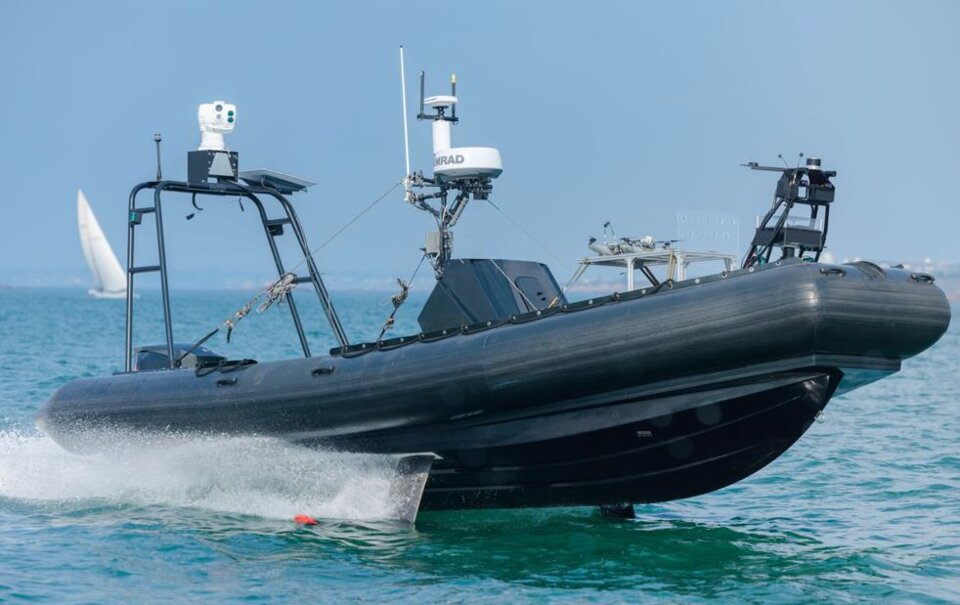
Born from the ETRACO program developed for French special forces, our USV combines proven hull technology with cutting-edge autonomy software to deliver a multi-purpose maritime surveillance platform.
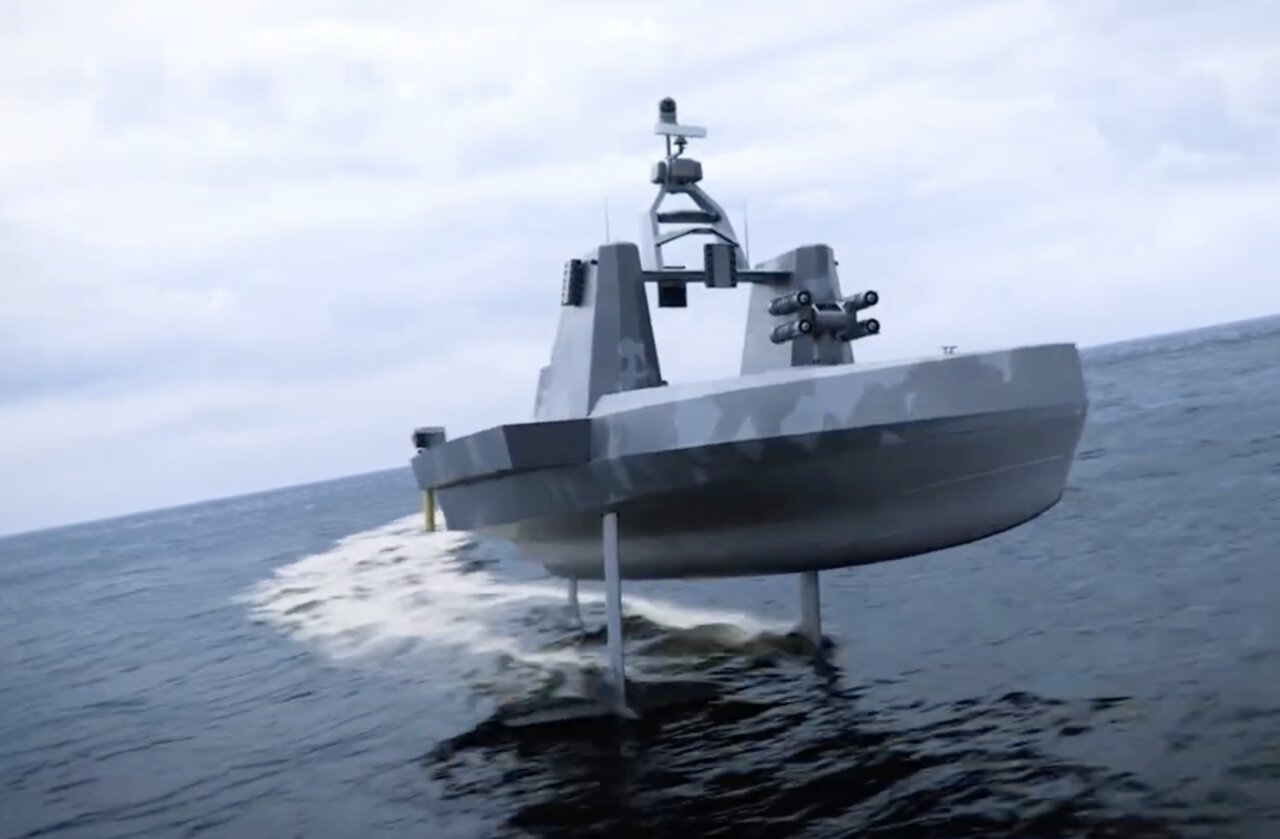
Unlike conventional hulls that fight the water, hydrofoils lift the vessel above the surface at speed. This fundamentally changes the performance equation:
Reduced wave impact means electronic sensors achieve dramatically higher accuracy for detection and identification.
Less hull drag means significantly longer range on the same fuel — critical for persistent surveillance operations far from shore.
Foiling at up to 45 knots, the USV can intercept and track fast-moving vessels that traditional patrol boats cannot reach.
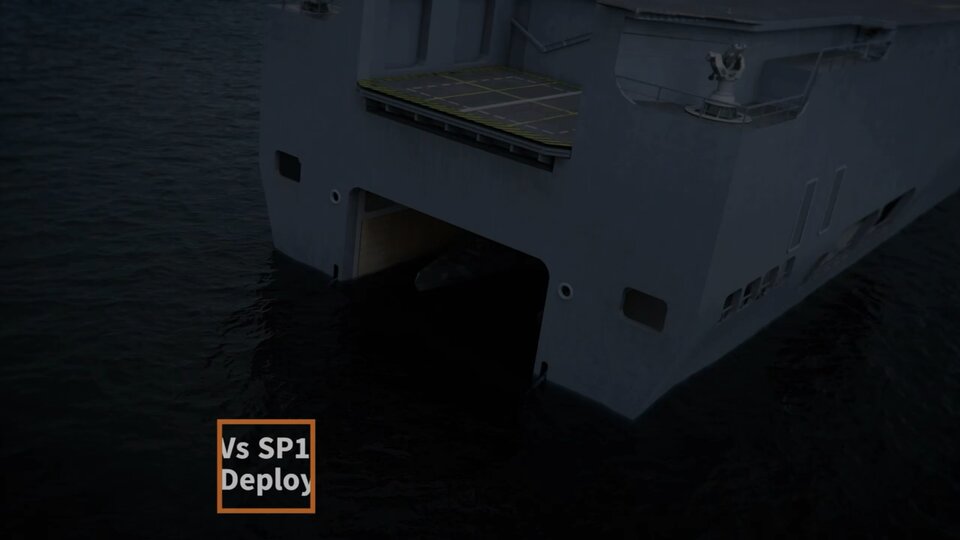
Each ARGOS Naval USV is designed as a multi-domain platform. It can launch, recover, and recharge aerial drones mid-mission, creating a persistent maritime surveillance bubble that extends far beyond the horizon.
Aerial drones deployed from the USV can be equipped with a variety of payloads including surveillance cameras, thermal imagers, communication relays, and warheads for defence applications — transforming a small autonomous vessel into a serious tactical asset.
ARGOS Naval offers two USV variants built on the same hydrofoil architecture: a compact 4m model for coastal surveillance and a larger 6.5m model for extended blue-water operations with dramatically increased range.
| Parameter | 4m USV | 6.5m USV |
|---|---|---|
| Overall Length | 4.33 m | 6.50 m |
| Weight (loaded) | 350 kg | 900 kg |
| Max Speed | 42 kn (45 burst) | 40 kn |
| Cruise Speed | 28 kn | 28 kn |
| Range | 200 nm | 500 nm |
| Engine | Yamaha 105 cv | Upgraded outboard |
| Sea State (nominal) | 4 | 4 |
| Communications | Starlink / Eutelsat | |
| Navigation | GPS + INS + SLAM | |
| Sensors | EO/IR, Radar, AIS, LIDAR | |
| Autonomy Level | MIL-STD Level 4+ | |
| Endurance (cruise) | 12+ hours | 30+ hours |
| Payload | Drone deck | Extended drone deck + cargo |
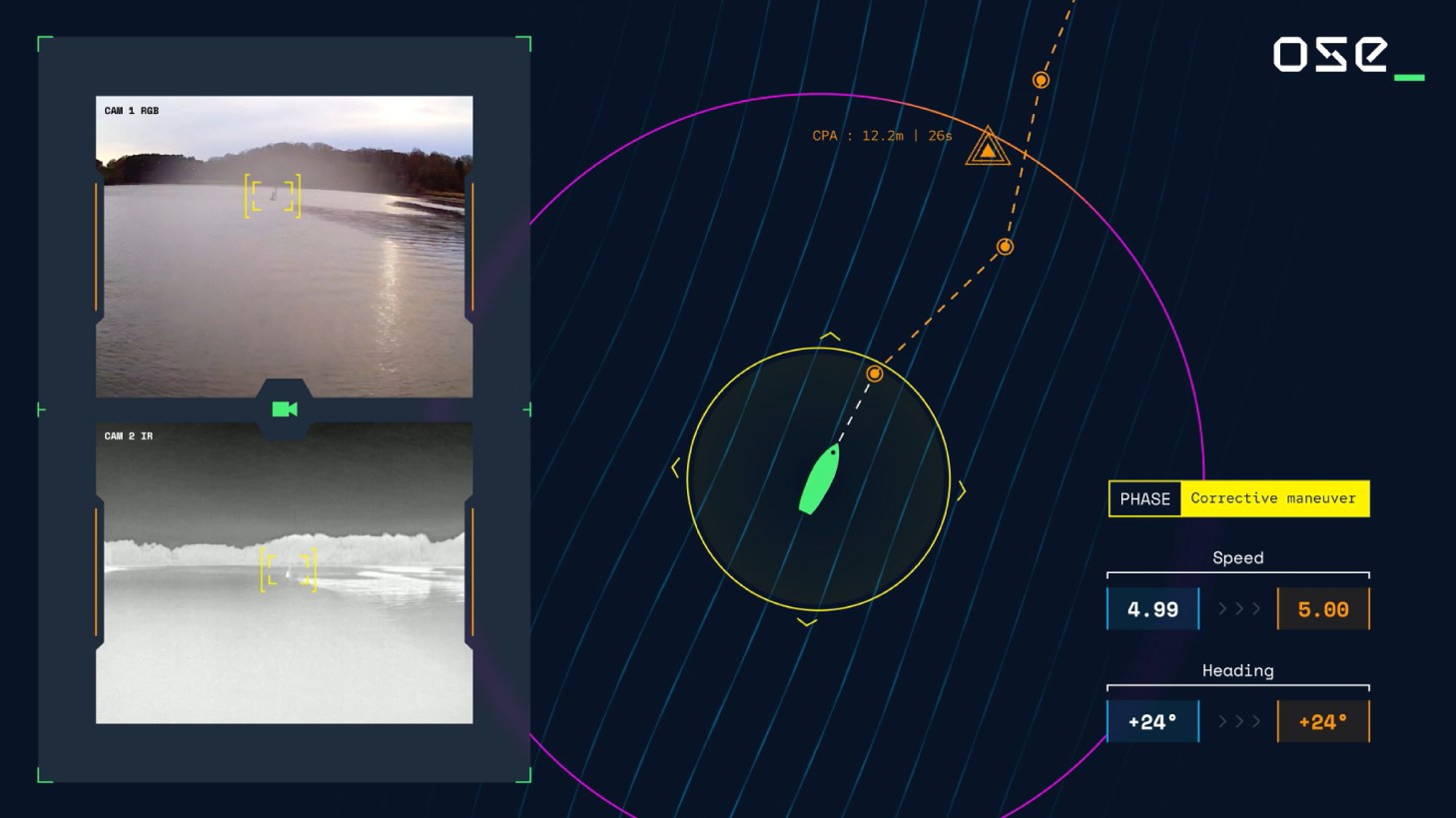
Our proprietary software stack handles the complete autonomy loop: Vision, Decision, and Action.
Sensor fusion pipeline combining radar, EO/IR, AIS, and LIDAR data to create a real-time maritime situational picture. Object detection, classification, and tracking powered by deep learning.
Adaptive mission planning engine that evaluates threats, prioritizes targets, and adjusts patrol routes in real time. Human-in-the-loop escalation for rules of engagement compliance.
Perception-based navigation, adaptive collision avoidance, and autonomous ship handling. Man-over-the-loop architecture ensures safety while minimizing operator workload.
Our proof-of-concept prototype has been tested in real sea conditions in Bitung, Indonesia — demonstrating autonomous navigation, sensor stability on hydrofoils, and remote command capability via satellite link.
This footage shows the actual USV operating in open water during the PoC validation phase.
Multiple independent sensor chains ensure continued operation even with individual system failures.
Critical decisions always escalate to a human operator. Full remote control capability at any time.
Edge-cutting protection prevents entanglement with nets, debris, or marine life.
High-speed evasion protocols activate automatically when threats are detected, preserving the asset.
Our team can provide detailed technical briefs, integration guides, and operational assessments tailored to your requirements.
Contact Our Engineers